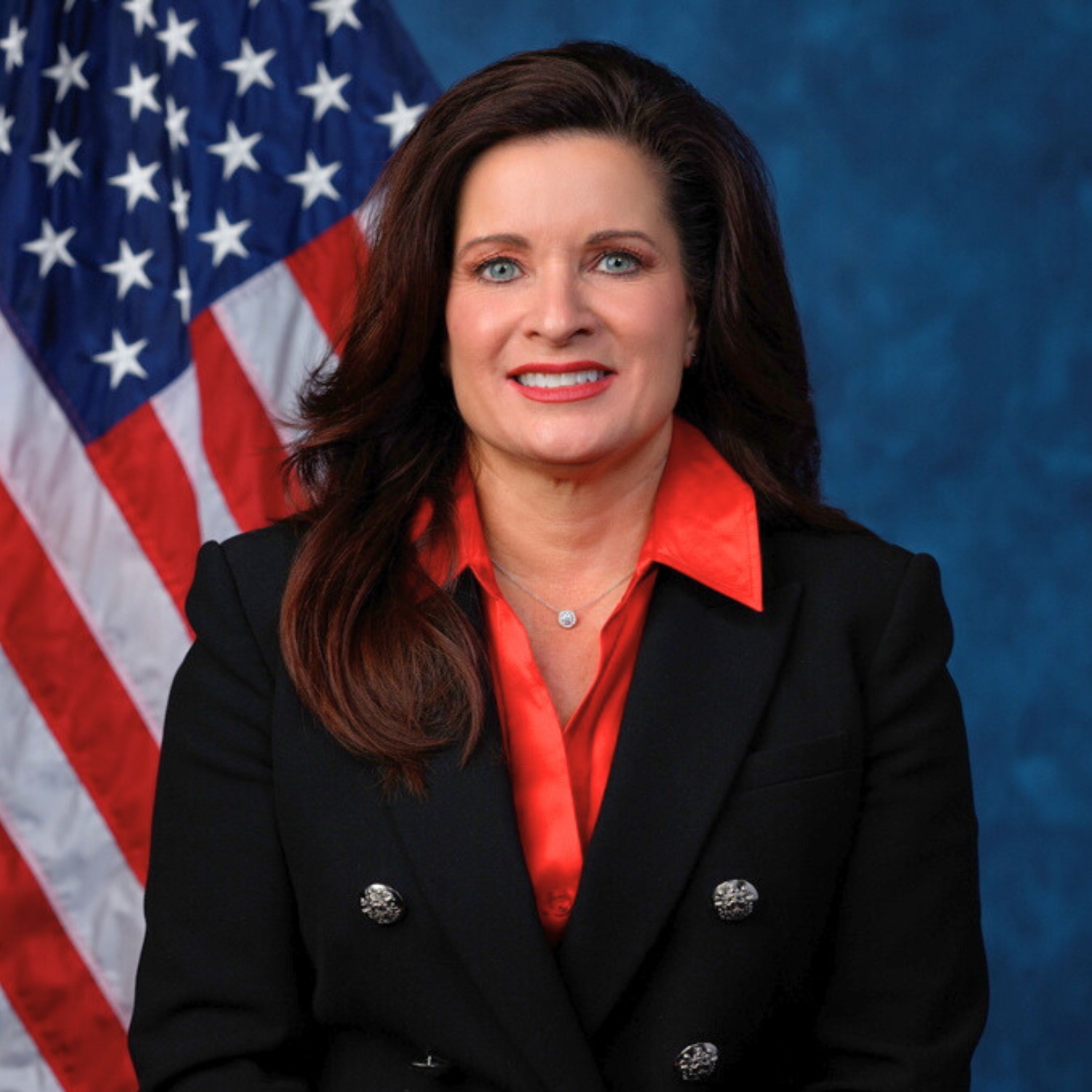
A sitting member of the U.S. House of Representatives just put up to a quarter-million dollars into Bitcoin. Not a meme coin. Not a seed-stage crypto startup. BlackRock's iShares Bitcoin ETF — ticker IBIT — the most vanilla, institutionally acceptable way to hold BTC without touching a wallet. Congresswoman Sheri Biggs filed the disclosure in mid-April 2026, and the timing is sharp: BTC is sitting at roughly $75,977, spot Bitcoin ETF inflows just hit nearly $1 billion in a single week, and Congress is still actively debating crypto legislation. That's not a coincidence worth ignoring.
Under the STOCK Act, U.S. lawmakers are required to disclose personal investment transactions within 45 days of execution. Biggs, a Republican Congresswoman from South Carolina, filed a disclosure showing a purchase of between $100,001 and $250,000 in BlackRock's iShares Bitcoin ETF (IBIT), as reported by Bitcoin Magazine and Decrypt in mid-April 2026. Congressional disclosures use asset-value ranges rather than exact figures, so $250,000 is the ceiling — not necessarily the precise amount invested.
Still, a five-to-six figure Bitcoin ETF position from a sitting lawmaker is notable regardless of the rounding. Biggs sits on congressional committees that touch financial services and oversight — the kind of perch where crypto legislation actually gets shaped. The disclosure doesn't imply any wrongdoing, but it does put a very public stake in the ground.
Biggs represents South Carolina's 3rd Congressional District. She was elected to the U.S. House and serves on committees relevant to financial policy. Her Bitcoin ETF disclosure makes her one of the more prominent sitting lawmakers to publicly hold a BTC-linked position at this scale — joining a small but growing cohort of elected officials who have disclosed crypto holdings in recent years.
For anyone who's held Bitcoin directly — managed their own keys, dealt with hardware wallets, navigated exchange withdrawals — the appeal of an ETF wrapper might seem like giving up the point. But for a sitting Congressperson, IBIT is the obvious vehicle, and here's why:
BlackRock's iShares Bitcoin ETF has been the largest spot Bitcoin ETF by assets under management since its January 2024 launch. It's the most institutionally recognized BTC wrapper available to U.S. investors, full stop. When a politician wants Bitcoin exposure without the optics of running a node, IBIT is the call.
For a deeper comparison of what holding a Bitcoin ETF means versus holding BTC directly — and why it matters for how you manage a crypto bankroll — the distinction has real implications whether you're a lawmaker or a sports bettor.
Biggs' disclosure didn't drop in a vacuum. The same week, spot Bitcoin ETFs attracted nearly $1 billion in weekly inflows, according to Cointelegraph — one of the strongest weekly accumulation figures since the ETF products launched. That's institutional money, not retail FOMO. Pension funds, registered investment advisors, family offices, and now apparently U.S. lawmakers are all parking capital in the same product at roughly the same moment.
BTC broke through a seven-month resistance ceiling recently, per Decrypt, and is up approximately 0.74% in the last 24 hours as of April 18, 2026. The price action and the ETF inflow data are telling the same story: sentiment has shifted, and capital is moving to confirm it.
The $1 billion weekly inflow figure matters for a specific reason. Spot Bitcoin ETFs require the fund managers to actually purchase BTC on the open market to back new shares. Every dollar of inflow into IBIT or its competitors translates directly into buy pressure on Bitcoin itself. This is structurally different from futures-based products — spot ETFs are a genuine demand mechanism, not just a paper bet on price.
Let's be direct: one congressional disclosure doesn't move markets. Biggs' $250,000 position is a rounding error against $1 billion in weekly ETF inflows. The signal here isn't the dollar amount — it's the normalization.
When elected officials start publicly disclosing Bitcoin ETF positions while simultaneously debating crypto legislation, it compresses a specific risk premium that has hung over BTC for years: the regulatory hammer. A lawmaker who personally holds IBIT has a very different incentive structure around crypto policy than one who doesn't. That's not a guarantee of favorable legislation — political incentives are complex — but it is a meaningful data point about which direction the wind is blowing in Washington.
For sports bettors who hold Bitcoin as their primary bankroll currency, this macro context matters. BTC volatility doesn't stop when there's a good card on Saturday night. A bettor with $5,000 in BTC is running two positions simultaneously: the sports bet and the BTC/USD rate. Understanding what's driving BTC's macro moves — ETF inflows, institutional accumulation, political normalization — is part of managing that bankroll intelligently.
This is similar to the broader conversation around athletes taking crypto salaries. When Odell Beckham Jr. took his NFL salary in Bitcoin, the question wasn't just ideological — it was a live financial position that fluctuated with every macro BTC move. Lawmakers and athletes making BTC bets are different in form but identical in principle: they're denominating a portion of their financial life in Bitcoin and accepting the volatility that comes with it.
It's also worth noting that Washington's relationship with crypto has been a moving target. The intersection of institutional partnerships and crypto normalization is happening across sports, entertainment, and now elected government simultaneously. That's not a trend — it's a structural shift.
A sitting U.S. lawmaker buying into BlackRock's Bitcoin ETF during a week of nearly $1 billion in spot ETF inflows is a data point — not a price guarantee. But it reflects accelerating institutional and political normalization of BTC at a moment when the asset is breaking through multi-month resistance. For sports bettors denominating bankrolls in Bitcoin, these macro forces shape the real-dollar value of every unit they hold. Tracking them is as important as tracking line movement on Sunday's game.
Sheri Biggs is a Republican U.S. Representative from South Carolina's 3rd Congressional District. She serves on congressional committees relevant to financial oversight. In April 2026, she disclosed a personal investment of up to $250,000 in BlackRock's iShares Bitcoin ETF (IBIT), making her one of the most prominent sitting lawmakers to publicly hold a significant BTC-linked position.
Biggs filed a STOCK Act disclosure showing a purchase of between $100,001 and $250,000 in BlackRock's iShares Bitcoin ETF (IBIT), as reported by Bitcoin Magazine and Decrypt in mid-April 2026. The disclosure uses asset ranges per congressional reporting rules, so $250,000 is the upper bound of the reported position — not a confirmed exact figure.
BlackRock's iShares Bitcoin ETF (IBIT) is a SEC-approved, exchange-traded fund that tracks the spot price of Bitcoin. It's been the largest spot BTC ETF by AUM since its January 2024 launch. Unlike holding Bitcoin directly, IBIT requires no wallet, no private key management, and no custody decisions — investors hold shares through a standard brokerage account. The tradeoff: you don't control the underlying BTC.
It's a sentiment signal, not a price guarantee. A lawmaker publicly disclosing a six-figure Bitcoin ETF position while Congress debates crypto legislation suggests political normalization of BTC is accelerating. Combined with nearly $1 billion in weekly spot ETF inflows and BTC breaking through a seven-month resistance ceiling, it reflects a macro environment where institutional and political appetite for Bitcoin is growing — but past signals don't guarantee future price moves.
Biggs serves on congressional committees with relevance to financial services and government oversight. Her specific committee assignments give her proximity to the policy discussions shaping U.S. crypto regulation — which makes her personal Bitcoin ETF disclosure carry more narrative weight than a backbench disclosure might. Lawmakers who hold BTC-linked assets have a different incentive structure when voting on crypto policy.
If you're tracking BTC macro moves because your sportsbook bankroll lives on-chain, Bitcoin Bay is where serious crypto bettors operate. The platform accepts Bitcoin and 11 other cryptocurrencies, covers every major sport, and verifies its players globally. Whether BTC is at $76K or $100K, your bankroll moves with the market — so understanding what's driving it matters. The intersection of crypto and sports betting is only getting more complex, and Bitcoin Bay is built for bettors who take both seriously. Deposit in BTC, bet the card, and track the macro. That's the play.
Bitcoin Bay is intended for adults 21+. Sports betting involves risk — never wager more than you can afford to lose.